Dermatology
Tick Bites
Aug
PROTECT YOURSELF!
Some ticks can transmit several diseases.
Lyme disease is transmitted by the bite
of a Blacklegged (deer) tick when it is
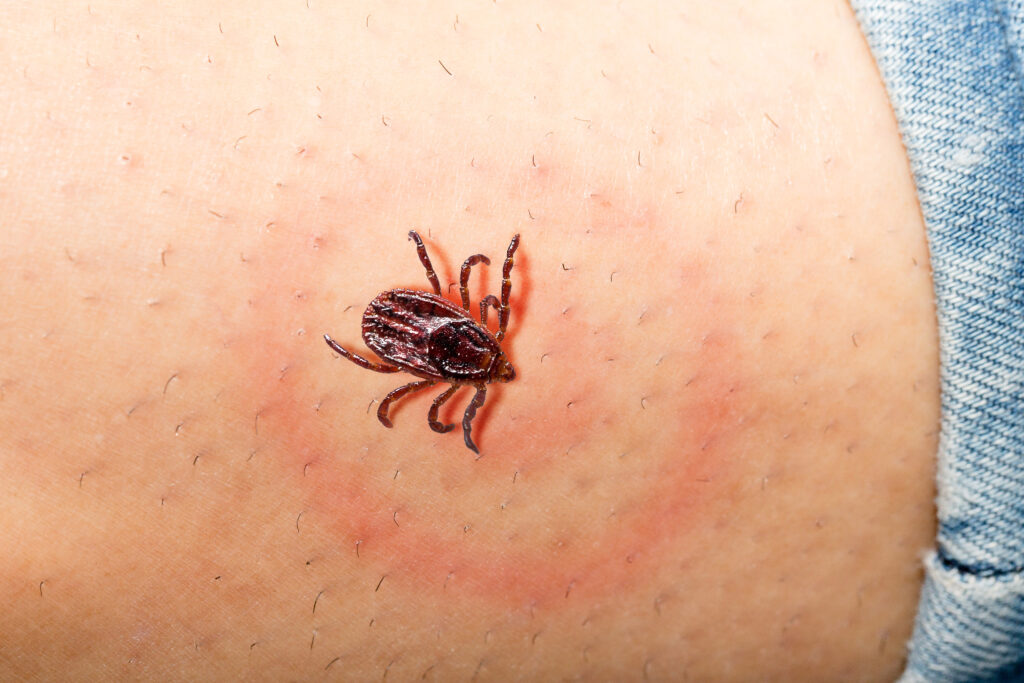
infected by a bacteria. A tick measures
between 1 and 3 millimetres before it feeds
on blood. Its painless bite can cause a rash
that quickly extends to over 5 centimetres,
and sometimes fever, headaches, fatigue
and muscle and joint pain. If the disease is
not treated promptly, it can cause serious
health problems later.
Ticks especially live in forests, wooded
areas, piles of dead leaves, shrubs and tall
grass. We might find them everywhere in
Québec. However, the risk of being bitten
is greater in southern Québec.
TO PROTECT YOURSELF FROM TICK BITES DURING
YOUR OUTDOOR ACTIVITIES:
• preferably walk on trails and avoid tall grass;
• use a DEET-based or icaridin-based mosquito
repellant on the exposed parts of your body, avoiding
your face;
• wear light-coloured long clothing, a hat and
closed shoes;
• tuck your pant legs into your socks and your shirt
into your pants.
Before meals
1 to 3 mm
After meals
Real size
BEFORE A TICK BITES
WHEN YOU RETURN FROM AN OUTDOOR ACTIVITY
NEAR TALL GRASS OR IN A WOODED AREA:
• take a bath or a shower within 2 hours and carefully
inspect your entire body and your children’s bodies to
check whether ticks are clinging to the skin, because
they are difficult to see;
• carefully remove any tick that is still clinging to your
skin as soon as possible (within 24 hours after the bite)
to reduce the risk of bacterial transmission;
• also examine your pets, your clothing and your
equipment (backpack, jacket, etc.) before entering the
home. Wash the clothing and equipment or put them
in the dryer as needed. Once indoors, a tick could bite
a person or an animal.
STEPS FOR REMOVING A TICK FROM THE SKIN
- Grasp the tick with tweezers as close as possible
to the skin. It is important not to squeeze the tick’s
abdomen. - Pull the tick gently and
continuously, without turning
it or crushing it. If you can’t
remove the tick’s head, leave it
in place; the skin will heal. - Clean your skin with soap and
water and wash your hands thoroughly. - Keep the tick in a tightly sealed container. Record the
date and the place you were when you were bitten and
the location of the bite on your body